Article contents
by Jean F. Hankins
In 1865 the citizens of Otisfield, a small town in Cumberland County, Maine, voted to buy a farm on which to settle its poor. Thus began Otisfield’s experiment with the poor farm, an experiment that continued nearly sixty years, until the farm closed its doors in 1924. Between 1800 and 1940, similar poor farms or almshouses could be found not only in most Maine communities but everywhere in the United States. Most Americans of the time would have recognized the first line of a sentimental poem by popular writer Will Carleton: “Over the hill to the poorhouse I’m trudgin’ my weary way.”1 Actually, the institution of the town farm, in Otisfield as everywhere else, was an optimistic move, part of a reform intended to solve the perennial problem of how towns and counties could best care for their poor. While the new method of segregating the poor in one place may have been more humane than the methods it replaced, it did not work well for long. After about 1880, the town farm system, in Otisfield and elsewhere, became increasingly more inefficient, and, even worse from the taxpayers’ viewpoint, expensive.
Why establish a town farm?
An analysis of the Otisfield poor farm provides us with a good glimpse into the culture of rural poverty in the period from 1865 to 1925 and helps explain the eventual failure of the poor farm system. A small town in a state composed mostly of small towns, Otisfield chose to open a poor farm, as most of its neighbors had already done, because it would save money.2 In 1820 the new state of Maine, following precedents in Elizabethan England and Massachusetts, had made it the sole responsibility of its towns “to relieve and support all poor and indigent persons.”3 During the 1820s a number of influential reports argued, with case studies and statistics, that the three prevailing methods of American poor relief were too expensive and actually promoted poverty by subsidizing those in need.4 In Maine these three traditional methods were: first, to board poor people in various homes throughout the town; second, until 1847 when the practice was outlawed, to auction off each pauper to the lowest bidder; and third, to provide occasional necessities to the less needy poor who remained in their own homes.5
Although Otisfield’s poor farm did not start operating until 1865, the town began considering one back in 1817, when the town was still part of Massachusetts. In that year a committee presented its report on the “best and most suitable method . . . for the support of the poor in this town.” What they had in mind was a workhouse similar to the ones Boston had established about 1740 and Portland in 1803.6 Otisfield, the committee said, should put as many of the children “out for wages” as possible, and “put the rest to the lowest bidder.” The town should then provide a workhouse for its paupers, along with some land. The workhouse should be placed under the inspection of “some suitable person” who should “see that each person is employed in work to the best advantage, according to the work he or she is capable of performing . . . “7
The town took no action on this recommendation but began a long period of vacillation, probably because of the high initial cost of purchasing a farm. In 1846 David Andrews was asked to find out “where a farm could be procured for the poor” and to learn “how they are managed in other places.”8 Nothing was done then, either, but public support for the town farm was increasing. In 1850 nine men petitioned “to buy a Town Farm this spring and put the paupers” there.9 In 1860 the town voted to purchase a farm; two years later it repudiated that vote. Finally, after the 1865 town meeting again approved the purchase of a farm, the selectmen bought the Elias Hancock farm on the Swampville Road and settled at least two or three people there.10 The timing of the purchase, 1865, may suggest that the townspeople were worried that the death of ten Otisfield soldiers in the Civil War might result in a large increase of widows and children on town support. Otisfield native Jonathan Edwards Piper, for example, a member of the 24th Maine Regiment, left a widow and six or seven children when he died in 1864.11
The farms and their buildings

Otisfield’s farm, like those in most other small towns, required neither new buildings nor an entirely new social arrangement. When the town purchased the Hancock place, it acquired a family farm with 200 acres of land plus a house and several outbuildings. The Hancock Farm functioned as the town farm until 1917 when the cows apparently contracted a disease and the barn had to be torn down.12 The town then purchased the George Bicknell farm, also on the Swampville Road, and moved its operations there.13 While we have no photographs of the first Otisfield farm, a good description of the main building does exist. According to state inspectors who visited in 1914, the Hancock place was a one-story house with eight rooms, including four sleeping rooms for the poor, known as “inmates.” The inspectors noted that privies were used; that water was piped from a well into the kitchen; and that the privy was probably draining into the well. Like most farmhouses of the day, Otisfield’s was heated by wood stoves and lit by oil lamps. At the time of the inspectors’ visit, the farm had no inmates. However, one poor person had lived there most of the year.14 In addition, the attic was providing overnight lodging for tramps passing through town.
Running the farm
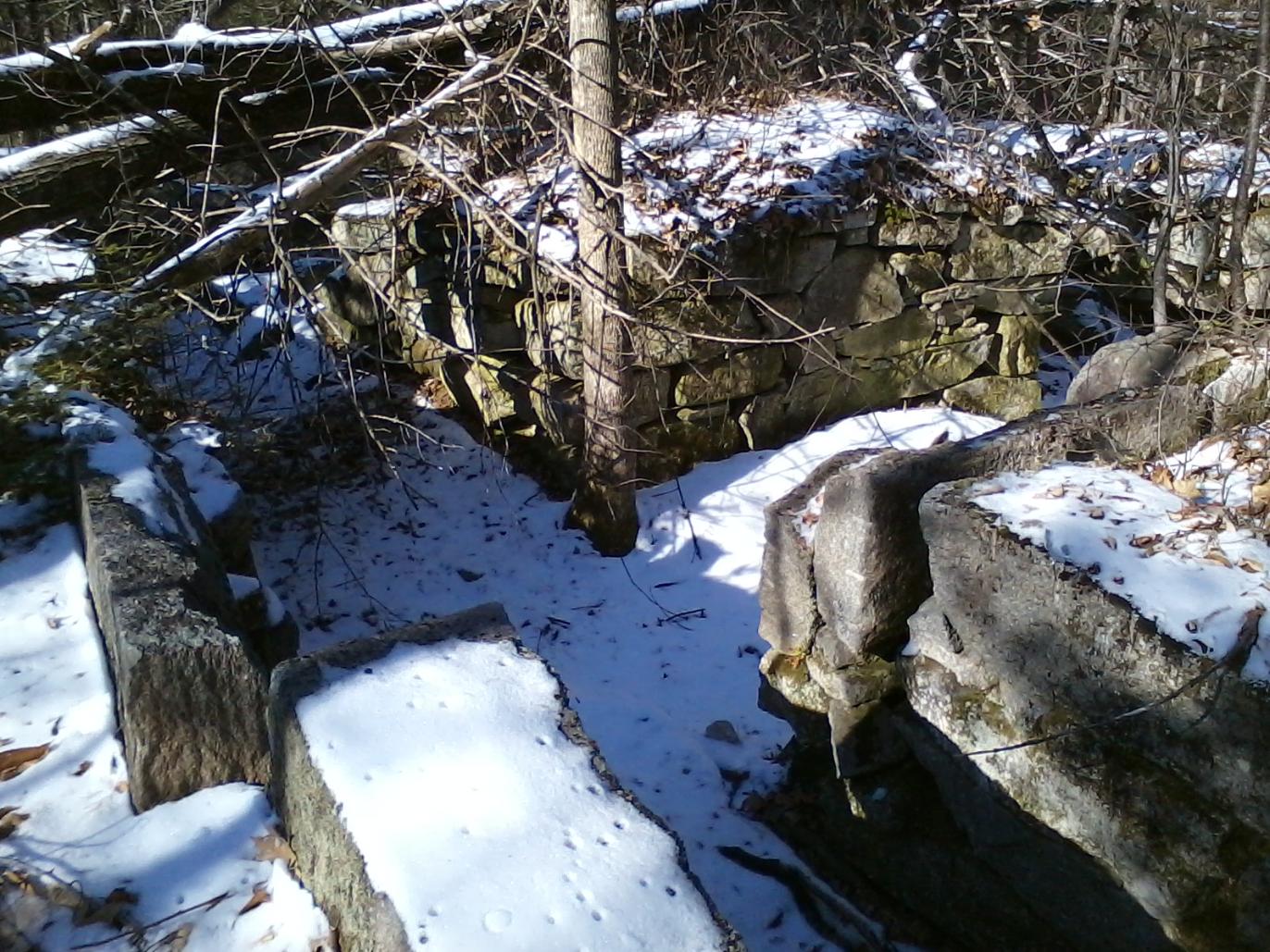
Otisfield hired two people to run the farm, a superintendent and his wife, at an annual salary which gradually increased from $200 to $350 a year. The length of a superintendent’s stay may be used as an indication of how well things were going on the farm. Unlike the town of Rumford, which employed only three superintendents in 31 years, Otisfield had at least 25 different individuals in 59 years.15 During one or two twelvemonth periods, the town hired a succession of three different men. Only one superintendent, Simon Scribner, remained more than two years.16
Part of the problem may have been that in Otisfield the superintendent and his wife had too much to do. The Maine inspectors found that in general the poor received better care in cities like Portland which employed laborers, cooks, and nurses. In Otisfield the superintendent was solely responsible for running the farm, at a profit if possible, raising crops, caring for the livestock, harvesting firewood, and repairing buildings. His wife, like all farm wives, prepared meals, stored food, took care of clothing and linens, and cleaned. In 1865, after the farm’s first year of operation, the selectmen wrote: “Paupers at the Town Farm have been well cared for, and their bedding and clothing in much better condition” than when they arrived.17 But because most of those living at the farm were elderly, the wife also served as nurse, a role not always compatible with that of housewife. As the state inspectors put it, “The superintendent and his wife must perforce give their first attention to the crops and the milk. . . . Stock pigs must be fed whether the dietary of a diabetic inmate can be catered to or not.”18 So in 1891, the Otisfield selectmen, who clearly did not wish to increase staff, instead increased the superintendent’s pay “on account of sickness among the inmates” which caused him “more trouble.”19
If anything, the selectmen underestimated the amount of trouble such sickness caused. And that sickness could be mental or emotional as well as physical. There was no hospital nearby, and Otisfield’s farm also sometimes served as makeshift mental asylum. In 1891, for instance, the town of Poland billed Otisfield for the support of William Chaplin and his son, John, both Otisfield residents. According to Otisfield’s selectmen, “The son was very sick with the typhoid fever and for some time it was thought he would die. When we understood the amount of their bills we at once moved both to the town farm.”20 A few years later the selectmen reported that on June 1, “James Knight came to us saying his son . . . was staying in the woods doing damage and he and his neighbors wanted him taken care of.” It took the selectmen five months to resolve the situation. “We captured him and took him to the farm. . . Mr. Knight made an agreement to take his son from the town and care for him for one year free of charge.” However, William Knight was soon committed to the State Hospital in Augusta.21
Work and daily life
The town reports from Otisfield and other Maine towns indicate that the superintendent could not expect the residents to do much farm work. In 1914 O. W. Lord, the Otisfield superintendent, was raising three acres of corn, beans, and other vegetables. Twenty acres of hayfields supplied feed for four cows and one horse. There were also two hogs and fifty hens to care for. But that year there was only one resident, a woman over 60 who, according to state inspectors, was able to do “considerable” work but refused to do so.22 Even when a number of men lived at the farm, most were too old or sick to work. In 1891, for instance, five of the six male residents ranged in age from 70 to 79; the sixth, while younger, was recovering from typhoid fever. It is hard to avoid the conclusion that those living on the poor farm were there because they could not work, not because they would not work.
The presence of vagrants complicated the labor problem on the farm. In the wake of two national economic depressions, about 1890 Maine apparently required all towns and cities to lodge tramps overnight.23 The state inspectors insisted that tramps should not sleep in rooms designated for the poor but should be given inferior quarters. Moreover, they must be required to work for their lodging. In its procedures for handling tramps, Otisfield again was typical of most rural Maine towns. State inspectors reported that in Otisfield tramps were occasionally fed and lodged, in the attic, which was acceptable, but that they were not required to work, which was not acceptable. “Able bodied men ought not to be given food and shelter unless they are required to work in payment for it.” In fact, only a few Maine municipalities succeeded in making tramps work for their food.24
Both tramps and residents ate well, if the inventories of the stock and provisions at the farm are any indication. In 1891, for instance, farm provisions included 25 bushels of potatoes, 250 pounds of pork, 100 pounds of beef, and 35 pounds of dried apples. In that year the farm was able to sell $434 worth of surplus butter, lima beans, corn, and other produce.25
Other aspects of life on the town farm appear to have been fairly satisfactory. The inspectors visiting Otisfield in the years 1913-1918 rated the furniture and bedding suitable, the sanitation good, and the rooms clean. Their two reports for 1918 suggest that the old man and woman living there were contented:
Discipline is easy. For recreation the two aged inmates were visiting, the woman lying on her bed and the man lying on a lounge in her room which seems to serve as their sitting room. They are unable to work. Her room has a stove in winter while his has not. In spite of her extreme old age and a broken hip, she can walk about some and seems to be of a happy disposition.26
In fact, except for the inspectors’ concern about pigs taking precedence over patients, there is little in their reports to discount the Otisfield selectmen’s observation, made in 1888, that “The inmates have a good and comfortable home and good care is taken of them by the superintendent and wife.” Evidently the Otisfield town farm was spared the bedbugs, dilapidated furniture, and contagious diseases which state inspectors found at other town farms and almshouses in Maine.27 It is probably true that no religious services were provided for the Otisfield poor, as they were in larger almshouses like Portland’s. On the other hand, such social events on the farm as the annual husking bees suggest that although the town poor may have been segregated, they were not completely isolated from the rest of the community.28
Why the farm lost its residents
But for the Otisfield taxpayers there was another, probably more important consideration. They had opened the town farm with the belief that by concentrating the poor in one place, the town would save money. But as years passed, the cost of running the farm rose while the number of residents dropped. Between 1918 and 1924, there seem to have been no residents at all. For years, in other words, the town farm was supporting not the town poor but a succession of superintendents and their families.
Where had all the poor gone? The 1920s was not a prosperous period in rural Maine. Nor had Otisfield accomplished the impossible and eliminated poverty. In 1924, in fact, the town was still appropriating a large share of its tax money for welfare. Three other factors may explain the lack of residents on the poor farm. The first is demographic. Maine’s population, especially in the rural areas, declined after the Civil War. Otisfield’s population fell so precipitately that in 1920 it was half what it had been in 1960.29 Secondly, as the years passed and the disgrace of going to the poor house increased, the selectmen seem to have exercised their discretion to be compassionate by boarding their dependent citizens somewhere else.30
The third, probably most important reason for the decline of residents at the farm can be attributed to humanitarian reforms instigated by the state. Beginning about 1840, Maine began to build alternative facilities to care for special categories of its needy citizens. In that year the Maine Hospital for the Insane opened in Augusta; in 1866 a home for veterans’ orphans.31 Otisfield rarely sent its mentally disturbed citizens to the Augusta facility because of the hospital’s high charges and the expense of transportation to the distant location. Instead, the town preferred to keep such cases on the town farm if possible. Town historian William Spurr recounts that one such individual, David Whitham, “was insane and kept in a cage on the townfarm,” much as John Sawyer had been treated years earlier. In 1875 the selectmen did decide to move the 35-year old Whitham to Augusta.32
After 1880, when the efforts of American social reformers began to bear fruit, Maine started to exclude whole categories of poor from the town farm. An 1889 Maine law that town officials would be fined if they placed poor veterans in the poor house provides striking evidence that the town farm had become a place of repugnance.33 The Board of Charities and Corrections instigated the 1913 law that criminals should be kept in a jail, not on the poor farm, and the 1915 law that excluded children under sixteen from the town farm.34 The feebleminded were a special concern for the Board which considered them “a constant menace to the community” because of the likelihood of “numerous offspring” which the community would have to support.35 Even after the Maine School for the Feeble-Minded (Pineland) opened in 1908, the Board accepted as inevitable the fact that almshouses would always house a number of the “mildly demented.”
The people who lived there
With all these groups for whom the state had provided other institutional arrangements or excluded entirely by law, it is no wonder that the number living on the Otisfield poor farm was so small, perhaps no more than fifty during its entire existence. A closer look at the 23 residents whom we can positively identify reveals a number who were sick, mentally ill, or retarded.36 In addition, most were old, most were men, and most were unmarried. In 1891, for instance, there were six men on the farm, probably the largest number ever. For all six, Spurr’s History of Otisfield gives details that suggest their circumstances. B. [Benjamin] R. Jordan, 79, who was unmarried, lived at the poor farm for three years before his death in May 1891. Thomas Wight, 78, the unmarried son of Thomas Wight, lived on the farm for three years but died in 1894 in Newry. Ira Crocker, 76, was, according to Spurr, a mute. Unlike most of the others, he had been married. Crocker probably lived on the farm from 1889 until he died in 1895. William Chaplin, 73, lived off and on with his son John in the nearby town of Poland. As previously related, in 1891, when Poland dunned Otisfield for medical expenses for John, Otisfield “at once” moved the two to the town farm, where they remained only a few months. The sixth resident of the town farm in 1891 was G. [George] W. [Washington] Lombard, 70, also unmarried, who died in 1891 after living on the farm about a year.37
The typical length of stay at the Otisfield farm was short, about two years. As is true of today’s nursing homes, a number of elderly people died there shortly after they arrived. One concludes not that their removal to the poor farm caused their deaths, but rather that they moved there partly because of poor health.
We also found that nearly all the town farm’s population came from large, well-connected families long established in Otisfield. The names Edwards, Hancock, Jordan, Knight, Lombard, Scribner, and Wight are represented not only on the poor farm but also among the town’s first settlers, town officers, and church deacons.
Only seven of the 23 identified on the farm were women. The high proportion of men was true also of nearly every Maine almshouse. In 1908 a state committee explained “the fact that there are nearly twice as many male as female paupers” was doubtless due to “the more correct habits of the gentler sex.”38 Interestingly, historian Michael Katz, writing in 1986, explained a similar national trend in much the same way. Women, he surmised, because of their greater adaptability, household work experience, and temperance, were simply more welcome in relatives’ homes. In other words, the son in Will Carleton’s poem would take in his poor old widowed mother but not his widowed father. Another explanation might consider the simple fact that men at this time still outnumbered women in Maine because of the high death rate of women during childbirth.39
Closing the farm
By 1918, after which date there seem to have been no poor on the farm, the Otisfield town farm had become an expensive, surplus institution. Not since 1904 had the farm turned a profit. In 1919 the town spent $2400 for poor relief, mostly for those living off the farm—principally for clothes and medicine for Isaac Moody, full support for one veteran and one veteran’s widow, and burial expenses for two men.40 In 1922 the town narrowly voted to continue the farm for one more year. The last straw landed on the camel’s back during the fiscal year ending February 1924. In that year the farm, run by a succession of three superintendents, cost the town almost $800. After printing the grim set of figures in their annual report, the selectmen wrote, “We have no comment to make other than to recommend that the stock be sold and the town farm be closed immediately.”41 The voters complied. In 1924 Otisfield closed the doors of its farm forever.
With the farm closed, the selectmen continued boarding the helpless poor around town, as they had done in the period before the Civil War, and as they had continued on a case-by-case basis even while the farm was operating. The problem of how to handle tramps was now solved in a different way, through a combination of private charity and church benevolence. According to one woman recalling her summers in Otisfield:
Tramps were a common occurrence. Mother would tell them to wash up at the outside well, prepare them some hearty food, and tell them if they needed sleep to go down the hill, take a right, and when they came to the East Otisfield Free Baptist Church the door would be open and they could sleep there.42
The town farm’s legacy
In conclusion, by 1900, if not earlier, the Otisfield poor farm had taken on the aura of today’s old folks’ homes. Like them, it was composed mostly of those with no other recourse. By the standards of the time, the conditions on the Otisfield farm were not uncomfortable, harsh, or inhumane. Judging from the reports of the state inspectors, in Otisfield the residents were treated more like boarders than inmates. Yet the first priority of the superintending couple was to run the farm profitably, a goal which sometimes must have compromised their care of the residents. Nevertheless, the poor farm was neither a reformatory for the shiftless nor a house of horrors.
During the entire period, admission to the poor farm remained a traumatic, shameful event in Otisfield as everywhere else. A growing feeling that it was wrong for the poor to be so singled out for treatment may explain the apparent contradiction of two statements made by Maine’s Board of Charities in 1926, two years after Otisfield’s farm closed. The Board stated, on the one hand, that “never before have the almshouses in Maine been in as good condition”; and, on the other hand, that “Many of these institutions should be closed as unfit places to house women and men who call upon the municipality for assistance.”43
The fundamental reason for the end of the Otisfield poor farm was the same as for its beginning: money. A drop in the town’s population, along with the humanitarian siphoning off of whole categories of needy persons, meant that the farm was often empty and no longer viable economically. If the selectmen could have foreseen the Great Depression about to overwhelm the nation, they might have put off selling the farm. But perhaps it was better that they lacked the gift of foresight. By 1924 it was evident that the town farm system, and local control of welfare, no longer worked well in Otisfield, Maine, or in the United States. After the New Deal reforms of the 1930s, the phrase “Over the hill to the poor-house,” along with the institution itself, rapidly vanished from the American scene to become part of America’s historic memory.
Otisfield, Maine, 1997
Editorial note: The original article compares the population in 1920 with “1960.” That date is retained as printed, pending verification against the cited sources. Section headings and linked notes have been added for this web edition.
Notes and sources
-
Will Carleton, Farm Ballads (New York: Harper, 1873), pp. 51-62). ↩
-
Not every Maine town established a town farm, but all the cities and most of the larger towns did so. In preparation for this paper, I researched, at random, the town or city farms in approximately 30 Maine municipalities. ↩
-
Laws of the State of Maine, 1821, chap. 122, Sec. 3. For a discussion of how closely Maine followed Massachusetts law, see the old but excellent study by Elizabeth K. Morrison, The History of Poor Relief in Maine, Ph.D. diss., University of Chicago, 1938. ↩
-
See The Almshouse Experience: Collected Reports (New York: Arno Press, 1971); and The Jacksonians on the Poor [a collection of pamphlets] (New York: Arno Press, 1971). ↩
-
See Jean F. Hankins, “A Cage for John Sawyer: The Poor of Otisfield Maine” (Maine Historical Society Quarterly, 34 [Fall 1994], 96-114. ↩
-
Thomas H. O’Connor, “’To Be Poor and Homeless in Old Boston,’” in Massachusetts and the New Nation, ed. Conrad E. Wright (Boston: Massachusetts Historical Society, 1992), p. 204; Abigail Ewing, “Portland’s Almshouse,” Landmark Observer (Nov.-Dec. 1982), p. 5. ↩
-
William S. Spurr, A History of Otisfield, Maine (Otisfield, c. 1950), pp. 204-205. ↩
-
Spurr, History, p. 244. ↩
-
Otisfield Papers, Maine Historical Society, Box 1/10. ↩
-
Spurr, History, pp. 256, 259; “Annual Report of the Selectmen and Treasurer of the Town of Otisfield for the Municipal Year 1865,” Otisfield Town Records, Collection 2, Otisfield Historical Society, unsorted papers. The large foundation for the Elias Hancock house still exist, in remarkably good condition. It is located on the north side of the Swampville Road, slightly west of the pipe line crossing the road. As of 2016, the town of Otisfield still owns undeveloped 175 acres of land at that location. ↩
-
Spurr, History, p. 533. The 1865 Otisfield Annual Report lists expenses for “Mrs. Piper & children.” Jonathan Edwards Piper was the son of John Piper. For more about this family, see Hankins, “Cage for John Sawyer,” pp. 96-114. ↩
-
Personal communication from Vida (Smith) Culbert, 25 March 1997. Mrs. Culbert was born in 1906 and as a child lived near the town farm. I am grateful to her for her good memory. ↩
-
Spurr, History, p. 286. ↩
-
Maine Board of Charities and Corrections, Quarterly Bulletin, vol. 6, no. 4 (1919), hereafter cited as MBCC. The Maine State Library has a nearly complete set of the bulletins and reports of this state agency. ↩
-
Yvette Lacroix, “A Landmark Passes with the Sale of the Town Farm on Swift River Road,” Rumford Falls Times Sept. 26, 1946. List of Otisfield superintendents was compiled from annual town reports of the period; U.S. Census, Cumberland County, for 1870 and 1880; and personal recollections of Vida Culbert. ↩
-
Information from Otisfield town reports, 1865-1924. ↩
-
“Annual Report. . . 1865,” Coll. 2, Otisfield Historical Society, loose. ↩
-
MBCC, Fifth Annual Report (1917), p. 46. ↩
-
Otisfield Town Report, 1891. ↩
-
Otisfield Town Report, 1891. ↩
-
Otisfield Town Report, 1899-1900, p. 13; Spurr, History, p. 461. ↩
-
MBCC, Second Annual Report (Augusta, 1914), p. 148; Third Annual Report (1915), p. 148; Quarterly Bulletin, vol. 2, no. 4 (Oct. 1916), pp. 46-47. ↩
-
I have not yet located the relevant state statute. The number of tramps on Maine poor farms takes a big jump about 1890. The main reason is probably economic. ↩
-
MBCC, Quarterly Bulletin, vol. 3, no. 4 (Oct. 1916), pp. 46-47. Bridgton reuired tramps to work for one hour each. The inspectors there thought “four hours would be better.” ↩
-
Otisfield Town Report, 1891, p. 7. ↩
-
MBCC, Quarterly Bulletin, vol. 5, no. 3 (July 1918), p. 127; and vol. 6, no. 4 (1919), p. 37. I have combined the two reports. The inspectors visited Otisfield on July 11 and Oct. 15, 1918. ↩
-
In addition to the reports of the MBCC, those interested in conditions on poor farms should look at U.S. Bureau of the Census, Paupers in Almshouses, 1904 (Washington, D.C., 1906); and Harry C. Evans, The American Poorfarm and Its Inmates (Des Moines, Iowa, 1926). With support from the U.S. Secretary of Labor, Evans headed a nationwide investigative team manned by members of a large number of fraternal organizations to visit poorfarms throughout the U.S. According to Evans, “There is but one good thing about Maine’s poorhouses—there are no children in them” (p. 49). Evans, whose work bears an unmistakable muckraking tone, concluded that most of the residents on poor farms were feeble-minded, and his major recommendation was to segregation the feeble-minded by sex lest they reproduce. See especially p. 93. ↩
-
Interview with Vida (Smith) Culbert, March, 1997. ↩
-
Richard H. Condon, “Living in Two Worlds: Rural Maine in 1930,” Maine Historical Society Quarterly, vol. 25, no. 2 (Fall 1985), 59-60; Morrison, History of Poor Relief in Maine, p. 28; Vital Records of Otisfield, Maine, ed. William S. Spurr (Portland: Maine Historical Society, 1948), p. 5. See also Clarence A. Day, Farming in Maine, 1860-1940 (Orono: Univ. of Maine Press, 1963), pp. 171-174, 176. ↩
-
In 1900, e.g., the selectmen chose not to send Ivory Whittum, age 71, to the farm but instead to board him with a neighbor (Otisfield Town Report, 1901). ↩
-
Morrison, Poor Relief in Maine, pp. 183-184. ↩
-
For David Whitham (1840-1884), see Spurr, History, p. 652.Otisfield apparently sent Whitham to Augusta in 1875 (cancelled check dated May 31, 1875, Otisfield Town Records, Coll. 2, unsorted). For Sawyer, see Hankins, “A Cage for John Sawyer,” 96-115. ↩
-
Morrison, Poor Relief in Maine, pp. 183-184. ↩
-
State of Maine, Public Laws, Chap. 177, sec. 177. ↩
-
MBCC, First Annual Report . . . July 12 to November 1, 1912 (Waterville: Sentinel Pub. Co., 1914), p. 46; Quarterly Bulletin, vol. 3, no. 4 (Oct. 1916), p. 40. ↩
-
Of those who were fairly young when admitted to the town farm, John Chaplin, age 20, had typhoid fever; William Knight, 24 and David Whitham, 40, were mentally disturbed; and Margaret Edwards, 50, was, according to Spurr, “feeble minded” (Spurr, History, pp. 348, 461, 652, 377. ↩
-
For their names, see Otisfield Town Report, 1891. For Jordan, see Spurr, p. 438; for Wight, p. 643; for Crooker, p. 358; for the Chaplins, see Otisfield Town Report, 1892. For Lombard see Spurr, p. 477. ↩
-
Report of the Commission to Investigate the Advisability of Creating a State Board of Charities and Corrections, submitted to the Maine legislature, Dec. 1, 1908, p. 73; cited by Morrison, Poor Relief in Maine, p. 206. ↩
-
Michael B. Katz, In the Shadow of the Poorhouse (New York: Basic Books, 1986), pp. 87-88. Censuses for Maine show more men than women from 1890-1930, but I have not found sex breakdown for different age categories. See Historical Statistics of the U.S., Part I (Washington, DC: Bureau of Census, 1975), p. 28. ↩
-
Otisfield Town Report, 1920. ↩
-
Otisfield Town Reports, 1918-1924. ↩
-
Barbara-Ann (Ayer) Giannantonio, “Memories of ‘Belayr,’ Peaco Hill Road, East Otisfield, Maine, 1928-1996,” unpublished typescript, 1996, Otisfield Historical Society, p. 3. ↩
-
MBCC, Ninth Report, 1929, p. 9. ↩