written by David Hankins, February 2000
Each summer when I was growing up, my family would travel from Kansas back to my mother’s home town, Otisfield, Maine. I would spend June in the Kansas heat dreaming of the wonderful days I would soon be enjoying, floating in the lake, lazing around in the hammock reading my book, and generally doing as little as possible. So it came as an unwelcome surprise one July morning when my mother woke me up to take a phone call.
“Can you help me dig a grave?” the voice on the phone said.
“A what?” I said, only half awake.
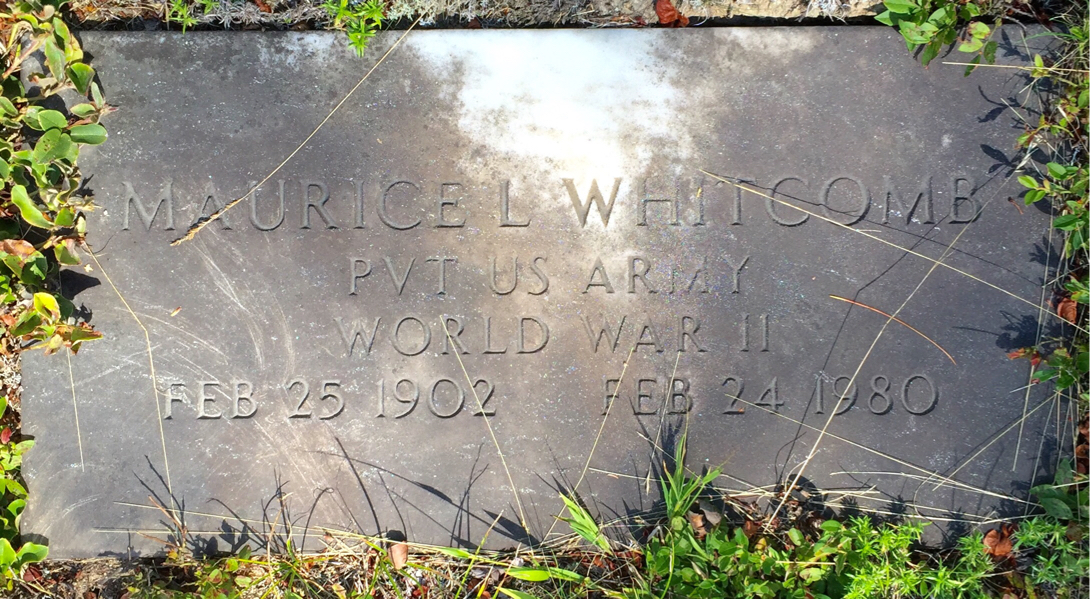
“A grave. Maurice’s funeral is tomorrow and we have to get a place ready for him.” The voice was my Uncle John’s. This was not a call I welcomed.
Maurice, a neighbor down the road, had worked around town as a handyman and general tinkerer for as long as I could remember. When I was helping my Uncle hay, he had showed me how to build a load of hay, starting at the corners, so it all didn’t come sliding off. Maurice, who chewed tobacco, taught my brother and me how to spit for distance. But over the last few years, I hadn’t seen much of him. On occasion, I’d wave to him sitting in front of his barn, surrounded by pieces of a dismembered lawnmower. Sometimes he would wave back. When his chair by the barn sat empty for a couple of weeks I didn’t think much of it. It came as a surprise when we learned that he had died in a nursing home up in Norway.
Maurice may have been a long time neighbor, but digging his grave was not a job I wanted. I had lived sixteen long years without digging a grave and had no wish to start now.
“Well, uh.”
“Well?”
“I’ll be right there,” I said, admitting defeat to myself. When Uncle John asked, you didn’t argue. I gulped breakfast, got out my bicycle, and headed down the hill two miles to the cemetery.
My uncle, John K. Pottle, did not dig graves for a living; he dug graves because looking after Elmwood Cemetery was his responsibility. He had other responsibilities in town. He was a selectman for a time. He moderated town meetings. He knew property lines in town better than most, and people would turn to him when they needed to locate a line or draw up a deed or even make a will. He farmed, he taught school, he worked in the woods. As the oldest of five children in my mother’s family, he was always the one to look up to. Uncle John was now in his seventies. I admired most things about him. I tried to overlook the fact that he was a grave digger.
Grave digging is one of those necessary tasks that has to be done, but we’d rather someone else did it. If we think of grave diggers at all, it is usually to make bad jokes about them. Most people shy away from matters of death and dying, and when they can’t, they get through them as quickly as possible. I was no exception. I had known Maurice, but as far as I was concerned, acquaintance should stop at the cemetery gate.
I propped my bicycle against the cemetery fence and went looking for Uncle John. He was already at work. Without being particularly tall, Uncle John always impressed me a big man. His seventy years had not diminished that stature. He was big around the middle; he had big hands. His movements were slow, but always with a purpose. He was not given to false starts. You were pretty sure he would end up where he wanted to be, whatever direction he started in. In this case that direction was a grave.
Maurice’s lot was way at the back of the old part of the cemetery. When Bill Spurr had been cemetery sexton years earlier, he sold off lots at the ends of the roads in an effort to keep the cemetery from expanding beyond its original dimensions. Bill Spurr didn’t like change. But people kept right on dying, and the cemetery kept right on growing beyond his bloackades. His bloackades did, however, prevent a back-hoe from reaching the rear of the cemetery. Back there is was all pick and shovel work.
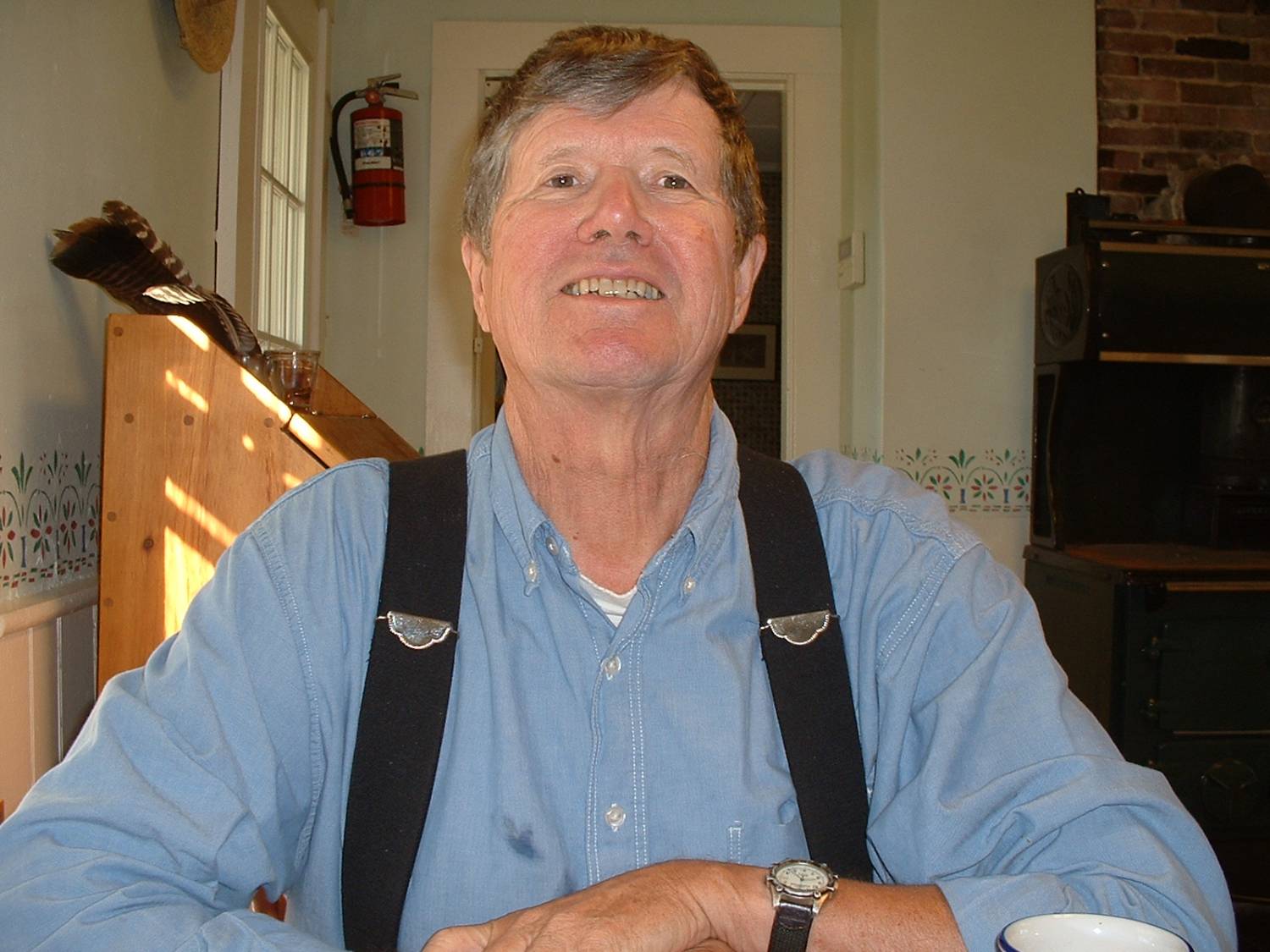
Uncle John, wearing his usual blue shirt, faded work pants, and suspenders, was probing the ground with a long slender metal rod.
“Shouldn’t you start with a shovel?” I asked. Grave digging was all new to me.
“Before we start digging for Maurice,” he said, “we have to make sure no one else is at home here.” Soon he declared the coast clear, and we went to work.
I had assumed that digging a grave was much like digging any other hole in the ground, that you started pitching dirt more or less anywhere until you had removed a sufficient volume for your purpose. Then you got to lean on our shovel. Not so. Uncle John worked slowly. He first laid out a four by eight foot rectangle, then carefully cut the sod into one foot squares. We lifted each sod out to place it on the grass next to the grace in the order it was removed. Eventually each sod would go back in the exact spot it came from.
And while we worked, I heard a lot about Maurice.
“Give Maurice a handful of bolts and enough wire, and he could fix most anything, but you would never know just how it would work.” Uncle John pried up the last block of sod and set it carefully aside.
“He grew up with Thanny and Sybil Lamb and worked around their place. The Lambs are over behind that row of trees.” Uncle John pointed toward the row of big maples lining the blocked off road. “The reason that pump in your dooryard squirts water in three different directions before it starts filling your bucket is because Maurice fixed it.” He took off his steel rimmed glasses, wiped them clean on a bandana, handed me a long handled spade, and said, “Time to start digging.”
Uncle John Spread an old tarp beside the bare rectangle of earth and we began to shovel in earnest, tossing dirt onto the tarp. For half an hour he worked at one end and I at the other in comparative silence until he called for a break. I was certainly ready for it. I looked at my work with satisfaction; I had almost kept up with him. My satisfaction didn’t last long. With a four foot rod he had brought with him he took the measure of our work. At his end of the grave the sides were exactly four feet apart at the top, at the bottom, at all points in between. His corners were perfectly square. He then turned to my handiwork. It did not pass muster. What started four feet wide soon shrank to about three, and finally petered out into a formless jumble.
“Did you ever hear about Maurice’s Fourth of July Celebration?” he asked me. I confessed I hadn’t.
“Maurice was pretty wild when he was young. One Fourth he decided to liven things up a took his old car down through Puglyville, lighting off sticks of dynamite and pitching them out into the fields as he went.”
Uncle John used his spade to start shaving back the sides of my hole.
“He blew holes in the fields all the way through town. Everyone was pretty upset.”
“I can imagine,” I said.
He measured with his four foot stick. “What you’ve dug looks a little like one of those holes. You’ve got to keep the sides square or the vault will hang up when they try to drop it in. Then you have a real mess.”
He handed me the shovel to continue squaring up my work, and as I shaved and shoveled, he explained to me who was where.
“Now up in the front there is where the Holdens are. They were early in town and are all pretty much together. And over to their right are the Butlers. The Whittums are back here on the left. Maurice used to live with Harry and Isadore.” He waved his hand in a big arc. “The Pottles and the Kemps, our family, are more or less scattered here and there.”
By the time I had made my end of the grave presentable, Uncle John had pretty much introduced me to all his old acquaintances who lived here. It was becoming clear to me that we were not alone on this job.
“Only a foot more to go, and we’re done,” Uncle John said.
I was surprised. “Don’t graves have to be six feet deep?” I asked. I didn’t know much about graves, but every other one I’d heard of seemed to be a mandatory six feet.
“Only four feet if you use a vault,” Uncle John said. “And we’re almost there.”
This was an unexpected bonus. I had envisioned having to square myself down in that hold for another five feet. With only four to go, I’d be in the lake by lunch-time. It was getting hot. I attacked the remaining foot with gusto.
At three feet six inches we hit the rock.
It didn’t look like much of a rock at first, just a little grey nub sticking up through the tan subsoil. I gave it a pry with my shovel. Nothing doing.
“Scrape around it and see what we’ve got,” Uncle John said.
I scraped. And scraped. And scraped. By the time I had done scrapping the little nub had swelled in proportion to a gigantic boulder filling much of one end of the grave.
“Shall we just fill it back in and go three and a half feet rather than four?” I asked. This seemed to me the only practical solution to encountering an immovable object just before lunch time.
“Can’t do that,” Uncle John said. “Four feet is four feet,” He got out his measuring stick, which unfortunately had not shrunk in the last hour. We were still six inches short.
Uncle John headed for his truck and was soon back with two crowbars and a long plank.
“If we can dig down under it we may be able to pry it out with the crowbars and roll it up the plank. No way we can lift that thing.” Visions of Thompson Pond were fast receding. This grave was going to end up six feet yet.
For the next three hours we sweated over that rock. There was only room for one of us at a time to dig and delve, so we took turns.
“Just a little more and we’ve got it,” Uncle John would say as the hold deepened from four feet to five and beyond. “Give it a good pry.” I would sink the crowbar as far as I could behind the rock and heave away, to no avail. How I longed for a stick of Maurice’s dynamite.
At three o’clock the boulder gave its first wiggle in response to our huffing and heaving. By three fifteen we had it rocking.
“Got it now,” said Uncle John. “For a while there I thought we might have to split it.” I did not even ask what that would involve. At this point I was so tired that I could hardly talk anyway.
At three thirty we started rolling the boulder up the plank, which Uncle John had angled from one end of the grave down under the boulder. It was a matter of inching it up the plank with our bars, then resetting and inching it again. Finally, at four o’clock we had done it. The boulder was out of the ground and rolled over the slop in the back of the cemetery, the grave was filled back in to its regulation four feet, its sides were smooth, its corners square. It was the most perfect hole in the ground that I had ever seen. And I was about as tired as I had ever been. I collapsed onto the mound of earth we had built. Too late for swimming today, I thought. Then I noticed that Uncle John was looking down at our handiwork, and he was smiling.
“That is a good grave,” he said. “Maurice will like that.”
Tired as I was, I finally got it. I understood what digging this grave was all about for my Uncle John. This was not simply a hole in the ground. Nor was it something to tell giggly jokes or scary stories about. For him the grave we had dug was a final gesture of respect for an old friend.
It was his gift to Maurice, and it simply had to be done right.
John K. Pottle died twenty years ago, and is buried in Elmwood Cemetery. My cousin John S. Pottle is in charge now. Every now and then he has to dig a grave. And when he does, you can be sure he does it with pride, because he had learned the same thing I did from our Uncle John. It’s not the job that matters. What matters is the spirit in which you do it.